The Six Rings of Olympic Airways: The Story Behind an Aviation Icon

Some of the world’s most recognisable logos tell a story. Few, however, have become as closely associated with Greece’s golden age of aviation as the six colourful rings of Olympic Airways.
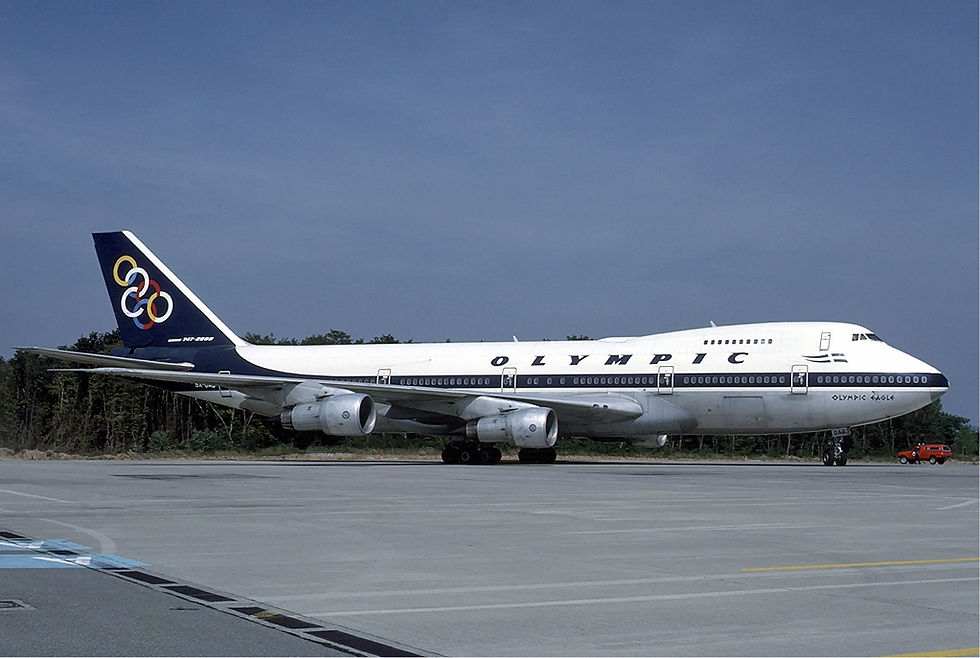
For decades, millions of passengers boarded aircraft carrying one of the country’s most iconic symbols. Yet one question has fascinated aviation enthusiasts for generations: why did Olympic Airways use six rings instead of the five made famous by the Olympic Games?
The answer lies in a legal challenge, a visionary entrepreneur and the creation of one of the most distinctive airline identities in aviation history.
A Logo That Could Not Be Used
When Aristotle Onassis took over Greece’s national airline in 1956, he envisioned far more than a new carrier. His ambition was to build a world-class airline that reflected Greece’s heritage, culture and international aspirations. He named it Olympic Airways, inspired by the Olympic ideal and the prestige that Ancient Greece represented around the world.
It seemed only natural that the airline’s visual identity would also draw inspiration from the Olympic Games.
However, there was one significant obstacle.
The famous five interlocking Olympic rings were already protected by the International Olympic Committee, which held the exclusive rights to one of the world’s most recognisable symbols. Using the emblem as the airline’s logo was simply not possible.
Rather than abandon the idea, Onassis chose a different path.
Olympic Airways introduced a new logo featuring six interlocking rings instead of five. The design preserved the spirit of the Olympic symbol while creating a unique identity that belonged exclusively to the airline.
The first five rings represented the world’s five inhabited continents, while the sixth represented Greece—the birthplace of the ancient Olympic Games and the nation Olympic Airways proudly connected with the rest of the world.
Unlike the Olympic emblem, the rings were also arranged vertically, creating a distinctive logo that quickly became synonymous with Greece’s national carrier.
More Than Just a Logo
The six rings soon appeared on every Olympic Airways aircraft, from the elegant Douglas DC-6 and pioneering de Havilland Comet to the Boeing 707 and, later, the iconic Boeing 747.
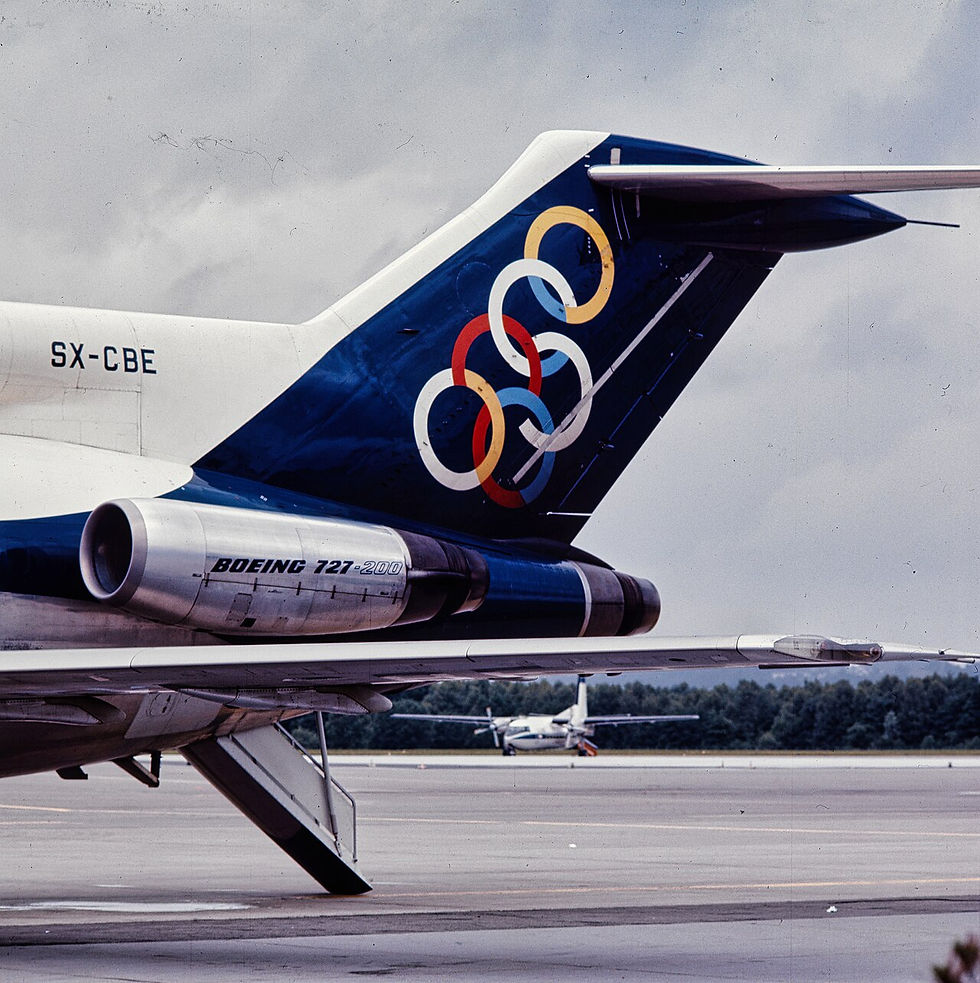
Combined with stylish uniforms, exceptional onboard service and an expanding international network, the emblem helped establish Olympic Airways as one of Europe’s most admired airlines. Wherever its aircraft landed, the six rings became an instantly recognisable symbol of Greek hospitality, elegance and ambition.
Over the years, the logo became inseparable from the Olympic Airways brand. More than a visual identity, it reflected the airline’s ambition to connect Greece with the world while establishing a distinctive presence in international aviation.
A Symbol That Lives On
Although Olympic Airways itself is no longer in operation, its iconic six-ring logo continues to fly on Olympic Air aircraft. Today, Olympic Air operates as a subsidiary of AEGEAN, primarily serving domestic and regional routes while preserving one of the most recognisable identities in Greek aviation.
For many travellers, the emblem evokes memories of an era when flying was an occasion, aircraft proudly carried Greece’s flag across the globe, and Olympic Airways stood among Europe’s most respected airlines.
Sometimes, the most memorable designs are born not from following the original plan, but from finding a creative solution when circumstances demand it. In the case of Olympic Airways, one extra ring became far more than a simple design choice—it became an enduring symbol that continues to represent Greek aviation more than six decades after it first appeared.
Sources
Transportation History – 1957: Aristotle Onassis Launches a New Airline in Greece
Olympic Airlines – Corporate Design & Logo History
Museum of Tourism – Olympic Airways


Comments